Thursday, July 31, 2025


AI and Automation: Jobs at Risk, Skills That Last

AI and automation are changing work. Smart machines take on more tasks. This makes us ask: which jobs will disappear? Which skills will always matter? This story checks today's jobs. We see where automation hits hardest. We find human skills that stay strong. Knowing these trends helps everyone prepare.

Section 1: How AI and Automation Change Jobs.

What Are AI and Automation in Work?

AI and automation seem alike. But they are different for jobs. Automation uses machines or software. They do the same tasks over and over. Think of robots in a factory. AI, or artificial intelligence, is smarter. It learns things. It makes choices. It solves problems. Chatbots are AI; they get what you mean. Both AI and automation make work easier and faster.

Most people picture simple robots for "automation." This is Robotic Process Automation, or RPA. RPA handles easy computer tasks. It follows clear rules. It might move data between spreadsheets. Cognitive automation uses AI. It does harder things. It understands words. It can see pictures. This AI helps businesses decide better.

Job Risk: High to Low.

Some jobs face more risk. AI and automation hit them harder. The risk depends on the job itself. Machines easily learn daily, same tasks. Jobs needing human skills or fresh ideas are safer. The World Economic Forum discusses job changes often. Their reports show many jobs will move. Some disappear. New jobs also pop up.

You must know your job's place. Does it repeat steps? Or does it need new thoughts? This helps you plan ahead. Jobs fit categories by automation risk. High-risk jobs have clear, set actions. Low-risk jobs need only human skills.

Jobs That Repeat Tasks.

Simple, repeated tasks go first. Machines learn these rules fast. They work quickly, without errors. Data entry clerks type info all day. A computer program does this easily. Factory workers repeat motions on a line. Robots handle these physical jobs well.

Even customer service changes. Chatbots answer easy questions. Humans handle hard ones. They also talk to angry customers. Simple tasks get automated. This lets people focus on complex problems.

Jobs Needing New Ideas.

AI struggles with new ideas. It cannot think outside the box. These jobs solve problems machines don't know. They need human smarts. They need fresh views. A scientist designs new tests. An artist makes unique art. AI cannot do this alone.

Business consultants fix company problems. They make new plans for special cases. This needs knowing people and markets well. These jobs are low risk. They need human ideas and good choices. AI helps these jobs. It does not take them.

Section 2: Jobs Most at Risk.

Factories: More Robots, Less People.

Factories already change a lot. AI and robots make things faster. They make fewer errors. More goods get made. They cost less money.

Identifying Jobs Most at Risk from AI

Manufacturing and Production: The Automated Factory

Factories are changing fast. AI and robots make things quicker. They make fewer mistakes. This means more goods are made for less money. But it also means fewer people work in factories. Robots can lift heavy items. They can weld or paint perfectly.

"Lights-out manufacturing" is now real. This means a factory can run with no human workers. It runs even in the dark. Companies use more robots each year. This makes many hands-on factory jobs shrink. It forces workers to learn new skills.

Transportation and Logistics: Self-Driving Changes

Self-driving cars and trucks are not just ideas anymore. They are here and getting better. This will change how we move goods and people. Truck drivers and delivery workers may see big job changes. Robot trucks are already tested on long roads.

Warehouses are also changing fast. Robots move packages around. AI systems find the best ways to store items. They find the best ways to ship items. This means fewer people load trucks. Fewer people sort goods. Some warehouses run mostly on machines. This makes deliveries happen faster.

Administrative and Office Support: Digital Work

Office jobs also feel the impact of AI. AI software can do many office tasks. Think of setting up meetings. Think of handling emails. Think of organizing files. These tools make office work much faster. They can even write simple reports.

Jobs like receptionists are changing. Bookkeepers and admin staff see shifts. AI tools take routine calls. They do common money tasks. This lets human staff focus on harder work. It means working smarter. But it also means fewer people doing basic tasks.

Customer Service and Retail: Chatbots and More

Many companies now use AI chatbots. Chatbots talk to customers. They answer common questions right away. They help with orders. They fix simple problems. This means fewer people handle basic calls. Many reports show people talk to a bot first now.

In stores, AI helps manage stock. It helps check out shoppers. Some stores have no cashiers. They use cameras. Sensors track what people buy. This makes shopping fast. But it also means fewer jobs for cashiers. It means fewer jobs for stock clerks. People are still needed for sales that need a human touch.

Future-Proof Skills: What Humans Do Best

Cognitive Skills: Smart Thinking

Machines are good at rules. Humans are better at thinking deeply. Critical thinking means looking at problems from all sides. It means asking hard questions. AI gives you facts. You must decide what they mean. Solving problems needs new ways to fix things. AI helps with this skill. It does not replace it.

Think of a doctor. They figure out a rare sickness. They use their knowledge. They also use their human sense. This power to think and choose wisely will always be worth a lot. Being open to new ideas is also very important.

Social and Emotional Intelligence: Human Bonds

AI has no feelings. It cannot truly understand human moods. That is why people skills are so important. Caring for others is a human strength. Talking well is too. Working with others is a human power. Many jobs need these skills. Therapists help with feelings. Teachers guide students. Leaders inspire groups.

Making a deal needs human ties. It is about trust. It is about understanding. Jobs needing lots of talk and care will always need people. Robots cannot comfort anyone. They cannot build strong bonds like us.

Creativity and Innovation: Driving Progress

Humans are special. We make new things. We paint. We write music. We invent new products. This creative spirit drives all progress.

Adaptability and Continuous Learning: The Lifelong Learner

Work changes quickly. You must always learn new things to keep up. Being able to change how you work is key. This means learning new tools. You can also learn fresh ways to think. People call this a growth mindset. It means you think you can always improve.

Folks who keep learning new skills succeed. They are set for the future. Online courses or new training help a great deal. Always welcome fresh ideas. Be open to new ways to do tasks. This makes you worth a lot at work.

Section 4: Emerging Roles and Opportunities in the AI Era The Rise of AI Trainers and Ethicists

New jobs appear as AI grows. Someone must teach AI what to do. These are AI trainers. Some are data labelers. They tag pictures or sounds. This teaches the AI. AI prompt engineers learn to ask AI smart questions. They get good replies.

We also need people to keep AI fair and safe. These are AI ethics officers. They help create rules for using AI. AI compliance managers check if companies follow the rules. These jobs are tied to AI getting bigger.

Human-AI Collaboration Specialists

To work with AI, we need people who link humans and machines. They are human-AI teamwork experts. They help teams use AI tools the right way. An AI integration manager helps firms add AI to their daily tasks. Automation helpers teach businesses new tech use.

These jobs make sure AI helps people. They do not replace them. They connect what humans do with what AI can do. This improves everyone's job.

Roles Focused on Human Interaction and Care

Some jobs will always need people. These jobs need caring and real human ties. Nurses and doctors give direct help to people. They make hard choices. They comfort patients. People who care for elders offer help and friendship.

Counselors help with personal issues. Teachers inspire students to think on their own. These jobs depend on understanding people well. Machines are not likely to take these jobs.

Section 5: Navigating the Transition: Strategies for Individuals and Organizations Upskilling and Reskilling: Investing in Human Capital

For you, staying ready means learning new things. Find skills AI cannot do well. Think about sharp thinking. Think about solving problems in new ways. Online courses are available. Sites like Coursera or edX offer them. They teach new tech skills. They also teach soft skills. Job training also gives you specific work skills.

Getting job certificates proves you have skills. Meeting others can open new paths. Take charge of your own learning. Always find ways to do better.

Fostering a Culture of Adaptability in Organizations

Businesses must also get ready for AI. They should help staff learn new skills. This means offering training inside the company. Companies can tell staff to try AI tools. Projects across teams help people learn together.

It is key to make a safe place at work. People should feel fine trying new things. This helps everyone change. A company prepares for the future by helping its people.

The Role of Education and Government in the AI Transition

Schools need to teach different things. They should teach skills for the future. Like solving problems. Government programs that teach adults can help. These programs train people for new work. Things like job loss pay help workers when jobs change.

Governments can also pay for new training. This makes sure people can learn what they need. It helps them for new jobs. Everyone has a part in this big shift.

AI and Your Job: How to Prepare

AI and machines are changing jobs. Some jobs will go away. New jobs will also pop up. Simple, repeated tasks are most at risk. This includes factory work, data entry, and customer service. But it is not about being replaced. It is about changing how we work. Doing well means you must adapt.

Certain skills will always matter. Machines cannot easily copy these. Think deeply. Understand other people. Be creative. Solve tough problems. Learn to use computers. People who keep learning do well. They use new tech tools. They build on their human strengths. These people will lead new ideas.

Do not fear AI. See it as a helper instead. It can take over boring jobs. This lets us focus on work that truly matters. The future is not humans against machines. It is humans working with machines. Keep up with new ideas. Learn the skills you need. Stay flexible. You can turn automation into a big chance for your career.

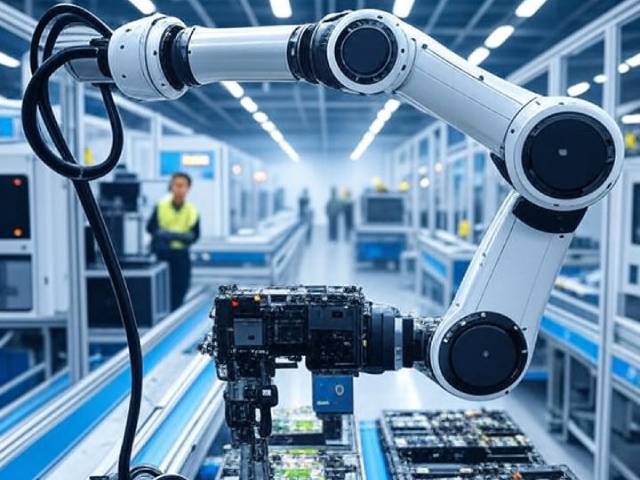
AI and Automation: Jobs at Risk, Skills That Last

Monday, June 16, 2025


RoboBrain AI represents a significant leap in the integration of artificial intelligence (AI) with robotics, aiming to create a unified, intelligent system that enhances the capabilities of robots across various applications. Initially introduced in 2014 by researchers led by Ashutosh Saxena at Cornell University, RoboBrain was envisioned as a cloud-based knowledge engine for robots, enabling them to learn from diverse data sources and share knowledge to perform complex tasks. The recent release of RoboBrain 2.0 by the Beijing Academy of Artificial Intelligence (BAAI) in June 2025 marks a pivotal advancement, positioning it as the most powerful open-source AI model for humanoid and general-purpose robots. This article explores the evolution, capabilities, and impact of RoboBrain AI, with a focus on its latest iteration and its role in shaping the future of robotics.

The Evolution of RoboBrain AI

RoboBrain (2014): The Foundation

The original RoboBrain, launched in 2014, was a pioneering effort to create a centralized knowledge engine for robots. Funded by the National Science Foundation, Google, Microsoft, and others, it aimed to enable robots to learn from multi-modal data, including text, images, videos, and physical interactions. Unlike traditional rule-based systems, RoboBrain used deep learning, structured learning, and interactive online learning to process data from sources like ImageNet, YouTube, and crowd-sourced platforms like Tell Me Dave. This allowed robots to understand objects, environments, and human language, facilitating tasks like navigation and object manipulation. The cloud-based architecture enabled robots to access and contribute to a shared knowledge base, improving efficiency and collaboration across different robotic systems.

RoboBrain 2.0 (2025): A Quantum Leap

Announced on June 7, 2025, by BAAI, RoboBrain 2.0 builds on its predecessor’s foundation, addressing limitations in model capabilities and training data. Described as the world’s most powerful open-source AI model for robotics, it is part of BAAI’s Wujie series, which includes RoboOS 2.0 (a cloud platform for deploying AI models) and Emu3 (a multimodal AI for text, images, and videos). RoboBrain 2.0 enhances humanoid robots’ spatial intelligence, task planning, and closed-loop execution, making it a versatile “brain” for diverse robotic applications. Its release on Hugging Face, supported by frameworks like FlagScale and FlagEvalMM, underscores its open-source commitment, fostering global collaboration in robotics development.

Key Features and Capabilities of RoboBrain 2.0

RoboBrain 2.0 introduces advanced functionalities that set it apart from earlier models and other AI systems. Its capabilities address three critical robotic brain functions: planning, affordance perception, and trajectory prediction. These are supported by a high-quality dataset called ShareRobot and a multi-stage training strategy.

1. Planning Capability

RoboBrain 2.0 excels in decomposing complex tasks into manageable sub-tasks, enabling robots to handle long-horizon manipulation tasks. For example, it can break down a task like “prepare a meal” into steps such as gathering ingredients, chopping vegetables, and cooking. This is achieved through interactive reasoning and closed-loop feedback, allowing robots to adapt plans in real-time based on environmental changes.

2. Affordance Perception

The model’s ability to recognize and interpret object affordances—understanding how objects can be used—enhances robotic manipulation. For instance, RoboBrain 2.0 can identify that a cup is for holding liquid or that a knife is for cutting, enabling precise interactions. This is supported by ShareRobot, a dataset meticulously annotated by human experts to ensure accuracy.

3. Trajectory Prediction

RoboBrain 2.0 predicts complete manipulation trajectories, anticipating the path a robot’s end-effector must take to execute tasks successfully. This capability is crucial for tasks like grasping objects or navigating obstacles, ensuring smooth and efficient movements. The model processes high-resolution images, long videos, and complex instructions to achieve precise predictions.

4. Multi-Modal Processing

Unlike traditional AI models, RoboBrain 2.0 integrates vision, language, and spatial data into a unified large language model (LLM). It uses a vision encoder and MLP projector to process multiple images and video clips, converting them into token embeddings for reasoning. This allows robots to understand complex instructions, recognize spatial relationships, and adapt to dynamic environments.

5. Scene Reasoning and Memory

RoboBrain 2.0 supports real-time scene reasoning through structured memory construction, enabling robots to maintain and update contextual awareness. For example, it can judge object proximity, recognize orientation, and estimate distances, making it ideal for applications like warehouse navigation or household assistance.

Technical Architecture

RoboBrain 2.0’s architecture is designed for scalability and efficiency. It processes multi-image, long-video, and high-resolution visual inputs alongside textual instructions and scene graphs. The model employs:

  • Vision Encoder and MLP Projector: Extracts feature maps from visual inputs and converts them into token embeddings.
  • LLM Decoder: Performs long-chain-of-thought reasoning, outputting structured plans, spatial relations, and coordinates.
  • FlagScale Framework: Supports distributed training across multiple GPUs, enabling efficient scaling for large models.
  • FlagEvalMM: Provides benchmarks for evaluating multi-modal performance, ensuring robust task execution.

The ShareRobot dataset, refined by human annotators, includes multi-dimensional information on task planning, object affordance, and trajectories, enhancing the model’s accuracy and versatility.

Applications of RoboBrain 2.0

RoboBrain 2.0’s advanced capabilities enable its use across diverse sectors:

  • Manufacturing: Enhances robotic arms for precise assembly and quality control, improving efficiency in factories.
  • Healthcare: Supports assistive robots in patient care, such as navigating hospital environments or assisting with mobility.
  • Logistics: Powers autonomous robots for warehouse navigation, inventory management, and delivery.
  • Education: Drives educational robots like AInstein, enhancing interactive learning experiences.
  • Household Assistance: Enables humanoid robots to perform chores like cleaning or cooking, as envisioned by companies like Tesla and Figure.

Robobrain AI, robot


Impact on the Robotics Industry

Accelerating Humanoid Robot Development

RoboBrain 2.0 is poised to accelerate the adoption of humanoid robots, particularly in China, where the robotics industry is booming. BAAI’s collaboration with over 20 companies, including Baidu, Huawei, and Unitree Robotics, fosters innovation and practical deployment. The open-source nature of RoboBrain 2.0 democratizes access to advanced AI, enabling startups and researchers to build on its capabilities. The model’s integration with RoboOS 2.0 and Emu3 further streamlines deployment, making it a foundational platform for robotics, akin to Android for smartphones.

Global Collaboration and Open-Source Innovation

By releasing RoboBrain 2.0 on Hugging Face, BAAI encourages global collaboration, allowing researchers worldwide to contribute to and benefit from the model. This aligns with the original RoboBrain’s vision of a shared knowledge base, but with enhanced capabilities and a focus on embodied intelligence. The model’s benchmarks, such as BLINK-Spatial and CV-Bench, demonstrate its superiority over both open-source and closed-source competitors, setting a new standard for robotic AI.

Ethical and Practical Challenges

While RoboBrain 2.0 offers immense potential, it raises ethical questions. The integration of advanced AI in robots blurs the line between artificial and human intelligence, prompting concerns about autonomy, accountability, and misuse. Additionally, maintaining complex AI systems requires significant resources, including computational power and data management, posing practical challenges for widespread adoption.

Comparison with Other AI-Driven Robotics Initiatives

RoboBrain 2.0 stands out among other AI-driven robotics projects:

  • Tesla’s Optimus: Focuses on humanoid robots for industrial and domestic tasks but is proprietary, limiting accessibility.
  • Boston Dynamics’ Spot: Uses AI for navigation and task execution but is specialized for specific applications like inspection.
  • Tianjin University’s Brain-on-Chip: Integrates human brain cells for enhanced learning but raises ethical concerns and is not open-source.

RoboBrain 2.0’s open-source model, multi-modal capabilities, and focus on general-purpose robotics give it a broader scope and accessibility compared to these initiatives.

Future Prospects

RoboBrain 2.0 is a stepping stone toward artificial general intelligence (AGI) in robotics, where robots can perform any task a human can. Its ability to integrate physical intelligence with AI aligns with the vision of researchers like Akshara Rai, who see embodied experience as critical to true intelligence. By 2027, advancements in RoboBrain could lead to mass-produced humanoid robots capable of seamless human-robot collaboration. Continued investment in datasets like ShareRobot and frameworks like FlagScale will further enhance its capabilities, potentially revolutionizing industries like healthcare, manufacturing, and education.

Actionable Steps for Leveraging RoboBrain 2.0

1.   Access the Model: Download RoboBrain 2.0 from Hugging Face and explore its checkpoints (Planning, Affordance, Trajectory).

2.   Contribute to Development: Use the ShareRobot dataset to train custom robotic applications or contribute new data to enhance the model.

3.   Integrate with RoboOS 2.0: Deploy RoboBrain 2.0 on compatible platforms for seamless cloud-based operations.

4.   Collaborate Globally: Join BAAI’s network of partners to share insights and accelerate robotics innovation.

5.   Upskill in AI and Robotics: Enroll in courses on platforms like Complete AI Training to master AI model development and robotic applications.

Wrap-up

RoboBrain AI, particularly its 2.0 iteration, marks a transformative moment in robotics, blending advanced AI with practical applications to create smarter, more adaptable robots. Its open-source nature, robust multi-modal capabilities, and focus on planning, perception, and prediction position it as a leader in the global robotics landscape. As industries adopt RoboBrain 2.0, it promises to enhance efficiency, foster innovation, and pave the way for a future where humanoid robots are commonplace. By embracing collaboration and continuous learning, developers and businesses can harness RoboBrain’s potential to shape a tech-driven, intelligent world.


Meet RoboBrain: The AI That's About to Change Everything (You Won't Believe What It Can Do!)

Wednesday, June 4, 2025


Artificial Intelligence has become the driving force behind innovation across industries. As we move into 2025, large language models (LLMs) like ChatGPT, Gemini, Copilot, Grok, Qwen, and DeepSeek are at the forefront of this transformation.

In this blog post, we’ll explore each of these models in detail — comparing their strengths, weaknesses, use cases, market impact, and future potential to help you decide which one suits your needs best.


🧠 The Rise of Large Language Models

Over the past few years, LLMs have evolved from experimental tools into essential components of modern technology stacks. Whether it’s coding assistance, content creation, customer service automation, or enterprise intelligence, these models are reshaping how we work and interact with data.

Let’s dive into the key players shaping the AI landscape today.


1️⃣ ChatGPT – OpenAI’s Industry Standard

📌 Overview

Developed by OpenAI , ChatGPT was among the first consumer-facing LLMs to gain widespread adoption. With its GPT-4 architecture, it excels in natural language understanding, reasoning, and code generation.

✅ Pros:

  • Exceptional performance in NLP tasks.
  • Extensive ecosystem with plugins and APIs.
  • Strong support for creative writing, logic, and programming.
  • Regular updates ensure consistent improvements.

❌ Cons:

  • High cost for enterprise usage.
  • Proprietary model limits transparency.
  • Usage caps can hinder scalability.

🌐 Impact:

ChatGPT popularized AI chatbots globally and became a standard for developers, educators, and enterprises alike.

🔮 Future Outlook:

Expect deeper integration with OpenAI’s broader AI ecosystem, including advancements in AGI research, enhanced safety protocols, and more specialized versions for niche domains.


2️⃣ Gemini – Google's Multimodal Powerhouse

📌 Overview

Google’s Gemini , developed by DeepMind, is designed as a native multimodal AI , capable of processing text, images, audio, and video seamlessly.

✅ Pros:

  • Truly native multimodal capabilities.
  • Excellent performance in math, code, and reasoning.
  • Integration with Google Workspace, Search, and Cloud.

❌ Cons:

  • Initial versions faced performance issues.
  • Slower rollout compared to competitors.
  • Less mature in some real-world applications.

🌐 Impact:

Gemini aims to redefine how users interact with Google products, especially in search, advertising, and cloud services.

🔮 Future Outlook:

With access to vast amounts of training data, Gemini is expected to evolve rapidly. Deeper integrations with Android, YouTube, and Chrome will further solidify its position.


3️⃣ Microsoft Copilot – Productivity-Focused AI

📌 Overview

Microsoft Copilot leverages OpenAI’s GPT models to deliver AI-powered productivity tools across Windows, Office, GitHub, and Azure.

✅ Pros:

  • Seamless integration with Microsoft 365 suite.
  • Superior code generation via GitHub Copilot.
  • Enterprise-grade security and compliance.

❌ Cons:

  • Heavy reliance on OpenAI infrastructure.
  • Limited flexibility outside Microsoft products.
  • Data privacy concerns for sensitive organizations.

🌐 Impact:

Copilot drives Microsoft’s AI-first strategy, transforming how professionals create documents, write code, and collaborate.

🔮 Future Outlook:

Expect Copilot to expand further into Office, Teams, and Azure, potentially integrating proprietary models over time for greater control and customization.


4️⃣ Grok – xAI’s Real-Time Challenger

📌 Overview

Built by Elon Musk’s xAI team, Grok stands out for its access to real-time data from X (formerly Twitter), making it ideal for current events and social sentiment analysis.

✅ Pros:

  • Unique access to live data streams.
  • Designed with personality and humor.
  • Independent from major tech ecosystems.

❌ Cons:

  • Lags behind in complex reasoning and coding.
  • Limited availability and use cases.
  • Still in early development stages.

🌐 Impact:

Grok challenges traditional AI models by promoting free speech and decentralized information flow.

🔮 Future Outlook:

As it matures, Grok could become valuable for news analysis, opinion tracking , and social media monitoring , particularly within the X platform.


5️⃣ Qwen – Alibaba’s Multilingual Giant

📌 Overview

Developed by Alibaba Cloud, Qwen offers robust multilingual support and is widely used across Asia-Pacific markets, especially in e-commerce and customer service.

✅ Pros:

  • Strong multilingual capabilities (Chinese, English, etc.).
  • Some versions are open-sourced (e.g., Qwen/Qwen2).
  • Tailored for enterprise and vertical-specific applications.

❌ Cons:

  • Lower global visibility compared to Western models.
  • Less aggressive marketing outside China.
  • Performance still catching up in certain areas.

🌐 Impact:

Qwen powers Alibaba’s ecosystem, including Taobao, DingTalk , and other business tools, while gaining traction internationally.

🔮 Future Outlook:

Increased international adoption, more open-source releases, and expansion into vertical-specific AI applications like finance and logistics are likely.


6️⃣ DeepSeek – Cost-Effective AI Innovator

📌 Overview

DeepSeek , a relatively new entrant, is making waves with high-performance models at significantly lower costs than industry giants.

✅ Pros:

  • Competitive performance in benchmarks.
  • Affordable pricing for startups and SMEs.
  • Commercial-friendly licensing terms.

❌ Cons:

  • New brand with limited recognition.
  • Fewer integrations and tooling options.
  • Not focused on multimodal features yet.

🌐 Impact:

DeepSeek provides an affordable alternative to expensive models, attracting budget-conscious businesses and developers.

🔮 Future Outlook:

Rapid iteration and benchmark-driven enhancements may allow DeepSeek to challenge incumbents in cost-sensitive markets and develop specialized models for niche use cases.


🧩 Comparative Summary: Key Takeaways

Feature
Best Performer
General Reasoning
ChatGPT / Gemini
Code Generation
ChatGPT / Gemini
Multimodal Capabilities
Gemini
Cost Efficiency
DeepSeek
Ecosystem Integration
Copilot
Real-Time Data
Grok
Open Source Flexibility
Qwen

🚀 Market Positioning

Model
Consumer Use
Developer Use
Enterprise Use
Research Use
ChatGPT
✅✅✅
✅✅✅
✅✅✅
✅✅
Gemini
✅✅✅
✅✅
✅✅✅
✅✅✅
Copilot
✅✅
✅✅✅
✅✅✅
Grok
✅✅
Qwen
✅✅
✅✅
✅✅
✅✅
DeepSeek
✅✅
✅✅
✅✅

📈 Emerging Trends in AI for 2025

  1. Multimodal Dominance : Gemini and Qwen are leading the way in visual and audio understanding.
  2. Specialization Over General Models : More domain-specific models will emerge in healthcare, law, finance, and education.
  3. Cost Optimization : DeepSeek and Qwen are pushing prices down, making AI accessible to smaller businesses.
  4. Real-Time AI Agents : Grok and Copilot are exploring live interaction, automation, and decision-making.
  5. Open vs Closed Debate : Qwen promotes open-source values, while others remain closed for control and safety reasons.

🤔 Which AI Should You Choose?

  • For Developers & Startups : Go with DeepSeek or Qwen for affordability and flexibility.
  • For Enterprises : ChatGPT , Gemini , and Copilot offer robust tools and integrations.
  • For Coding Help : ChatGPT , Gemini , and Copilot are top performers.
  • For Multimodal Tasks : Gemini leads the pack.
  • For Real-Time Insights : Grok is your go-to choice.
  • For Non-Western Markets : Qwen offers superior language support and local relevance.

🧬 Final Thoughts

The AI landscape is evolving at an unprecedented pace. While ChatGPT remains the most balanced and mature option, Gemini is closing the gap with advanced multimodal capabilities. Copilot thrives in the Microsoft ecosystem, Grok brings real-time insights, Qwen dominates in Asia, and DeepSeek disrupts with cost-effective solutions.

Each model serves different needs — from enterprise use to personal creativity. The competition is fierce, but that’s great news for users who benefit from faster innovation, better performance, and more choices.


Related Keywords for SEO:

  • ChatGPT vs Gemini vs Copilot
  • Best AI models 2025
  • LLM comparison chart
  • ChatGPT pros and cons
  • Gemini vs Qwen
  • DeepSeek review
  • Grok AI analysis
  • AI chatbot showdown
  • Top AI tools for developers
  • Enterprise AI platforms


ChatGPT vs Gemini vs Copilot vs Grok vs Qwen vs DeepSeek: A Comprehensive AI Model Comparison for 2025